.png)
Kindness: A Path to Health, Happiness, and Ethical Growth
When we think about kindness, we often frame it as a moral obligation—something we “should” do for others. But the Science of Happiness podcast episode, “Being Kind Is Good for Your Health”, reveals a deeper truth: kindness is also profoundly good for us. Hosted by the Greater Good Science Center at UC Berkeley, the episode highlights research showing that even small acts of kindness—holding a door, offering a compliment, or helping a neighbor—can reduce anxiety, boost our sense of purpose, and even improve physical health.
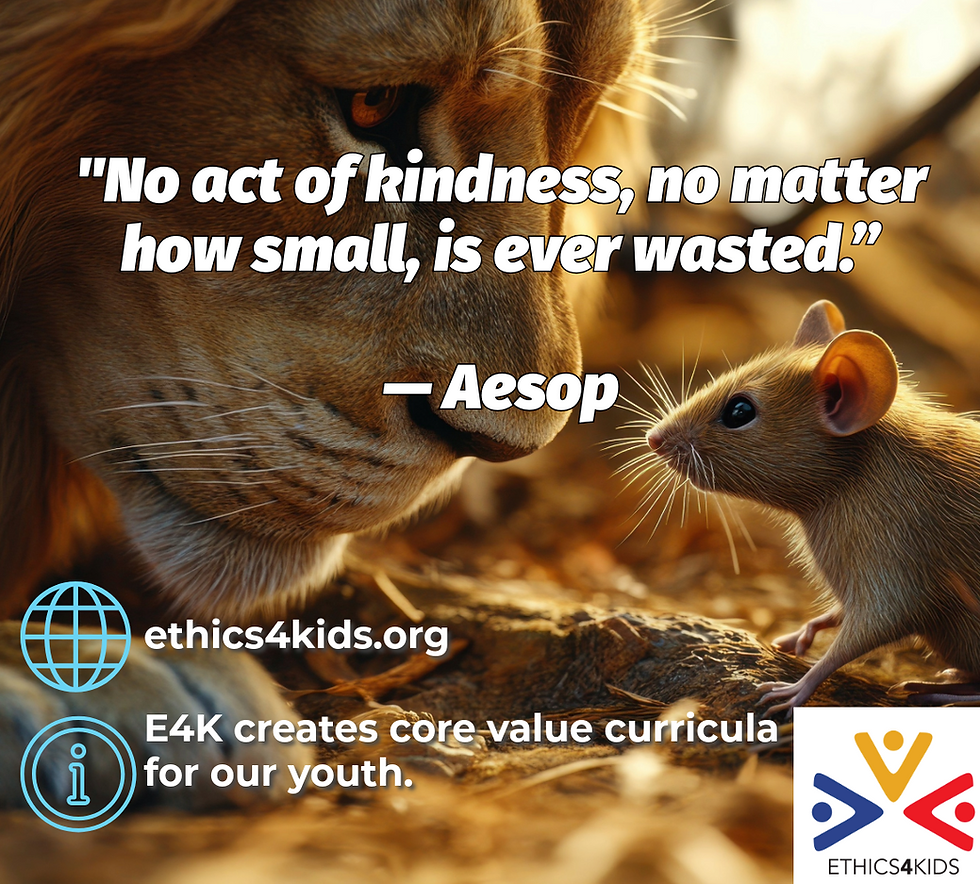
Psychologist David Cregg, featured in the podcast, explains that kindness activates dopamine and oxytocin, the brain’s “feel‑good” chemicals. These neurochemical rewards not only elevate mood but also strengthen social bonds, creating a cycle where kindness begets more kindness. In fact, Cregg’s research with veterans found that practicing kindness was more effective at reducing depression than traditional cognitive therapy. That’s a remarkable finding: kindness is not just a virtue, but a therapeutic tool.
This insight resonates deeply with the mission of Ethics4Kids, an initiative dedicated to teaching children values like kindness, respect, and responsibility. At Ethics4Kids, kindness isn’t presented as abstract morality—it’s woven into daily practice. Children are encouraged to give genuine compliments, express gratitude, and help peers. These small acts mirror the podcast’s findings: kindness ripples outward, lifting communities while nurturing the giver.
The Science of Kindness
The podcast emphasizes that kindness is contagious. When one person performs a kind act, observers are more likely to “pay it forward.” This ripple effect has been documented in multiple studies. For example, Harvard Health notes that kindness boosts happiness, reduces anxiety, and strengthens social connectedness. Similarly, the American Psychological Association reports that generosity can lower blood pressure and increase life satisfaction.
Evolutionary biology also supports this view. Humans are wired for cooperation; oxytocin, sometimes called the “bonding hormone,” is released when we engage in prosocial behavior. This chemical not only makes us feel good but also strengthens trust and empathy, essential for group survival. In other words, kindness is not just cultural—it’s biological.
Additional research from the Mayo Clinic shows that kindness reduces stress and promotes longevity. A study published in the Journal of Social Psychology found that people who performed acts of kindness for 10 days reported significantly higher levels of happiness. Even the National Institutes of Health has highlighted how kindness interventions improve well‑being across diverse populations.
Kindness as Social Fitness
From my perspective, kindness functions like a form of “social fitness.” Just as exercise strengthens muscles, kindness strengthens emotional resilience. Each act of kindness is like a workout for the heart and mind, building habits that make us more adaptable in stressful situations. And just like physical fitness, kindness is accessible to everyone. You don’t need wealth, status, or special skills to practice it—only intention.
This is why teaching kindness to children is so powerful. When kids learn that kindness is both a gift and a skill, they internalize it as part of their identity. Programs like Ethics4Kids ensure that kindness isn’t relegated to occasional acts but becomes a daily practice. Imagine a generation of children who see kindness not as an obligation but as a source of joy and strength.
The Ripple Effect in Communities
The podcast makes clear that kindness doesn’t stop with the individual. Communities built on kindness are healthier, more resilient, and more inclusive. Research from the Mayo Clinic shows that kindness reduces stress and promotes longevity, while the University of Oxford found that performing acts of kindness for just seven days increased happiness levels across participants.
Ethics4Kids embodies this principle by teaching children that kindness is not only about personal well‑being but also about community health. A child who learns to help a classmate or thank a teacher is practicing skills that will later translate into civic responsibility, leadership, and empathy in adulthood.
Kindness in Practice
The podcast suggests practical ways to cultivate kindness:
Perform five acts of kindness in a day. These can be small gestures like buying coffee for someone or sending a thank‑you note.
Practice gratitude. Expressing appreciation reinforces kindness and strengthens relationships.
Notice opportunities. Simply being mindful of others’ needs opens the door to kind action.
Ethics4Kids uses similar strategies, encouraging children to integrate kindness into everyday routines. For example, students might be asked to compliment three peers during the week or help clean up shared spaces. These exercises not only build character but also reinforce the health benefits highlighted in the podcast.
Why Kindness Matters Now
In a world often marked by division and stress, kindness offers a simple yet profound antidote. The Science of Happiness podcast reminds us that kindness is not just altruism—it’s self‑care. By teaching children kindness through Ethics4Kids, we’re not only shaping better citizens but also healthier individuals.
Kindness is a skill, a habit, and a health practice. It’s contagious, accessible, and transformative. Whether through neuroscience, evolutionary biology, or lived experience, the evidence is clear: kindness heals. And when children learn this lesson early, they carry it forward, creating communities where compassion is the norm rather than the exception.
Explore Further
